
Local SEO For Small Business Owners Without Tech Skills
Optimize Your Visibility via Google Business Profile tuning
Could a few adjustments on your listing be the difference between quiet tables and a full dining room, or versus inconsistent visits and consistent foot traffic for your shop?
Google Business Profile SEO (formerly Google My Business) comes at no cost. It tells Google who you are, your location, and your hours. A thorough and consistent profile enables Google surface your business in local searches and Google Maps.
GBP optimization begins with the fundamentals. You must have a complete location, primary phone, correct business categories, and helpful internet marketing service near Me^ info like parking or Wi-Fi. Consistently update hours, reply to reviews, and upload images or videos to improve relevance and credibility.
On-site SEO supports local. Clean permalinks, original content, and GSC monitoring help Google index your pages. This supports your Google Business profile. In tandem, managing your GBP and improving your website can strengthen your ranking.
Why GBP Matters for Local SEO
The GBP is critical when people look up services nearby. A detailed profile enables Google match the right businesses for a query. This makes local SEO on GBP foundational for any local marketing strategy.
Where GBP Shows in Google
Profiles appear in two primary spots: the 3-pack on Search and on Google Maps. They show up as a knowledge panel-style card with hours, ratings, photos, and a directions button. This visibility relies on clean data and ongoing Google Business profile maintenance.
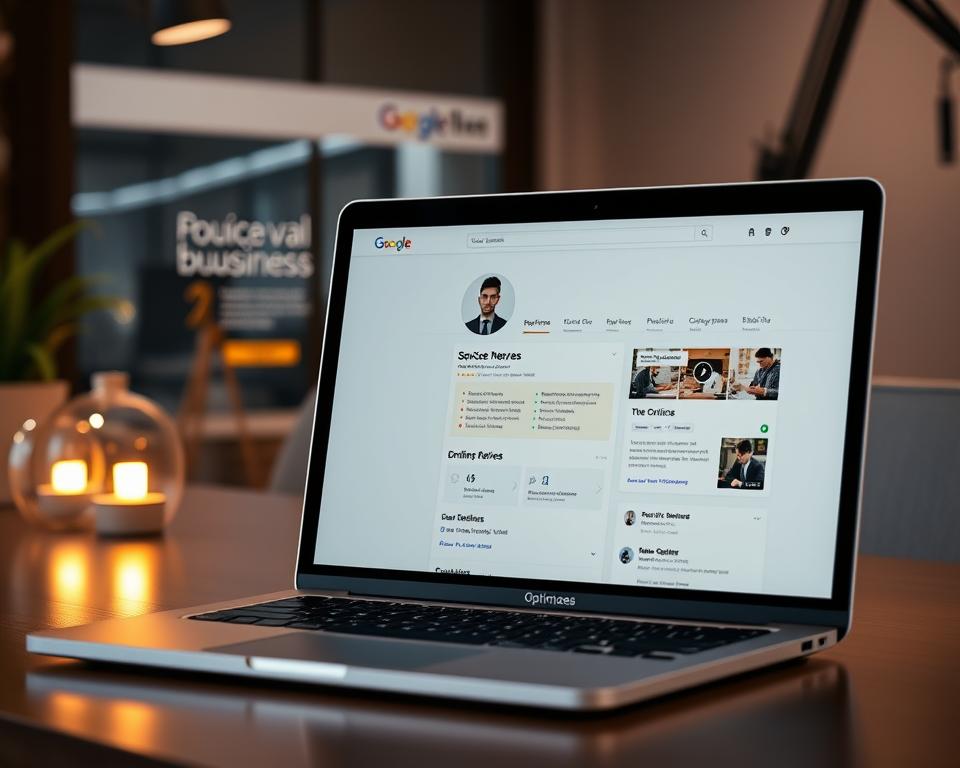
Benefits for local visibility and brand recognition
An well-maintained profile boosts the chance of prominent visibility for relevant searches. Increased clicks, calls, and directions requests happen when users find consistent info and strong reviews. Local businesses become more familiar when customers encounter the consistent images, descriptions, and services on Maps and Google Business Profile SEO.
What Drives Local Rankings
Three core factors decide local rankings. Relevance assesses if the profile matches the search terms. Fullness and accurate categories help here. Proximity reflects how close the business is to the searcher or target area. Prominence indicates real-world popularity and online presence, based on reviews, links, and citations.
| Ranking Signal | What It Means | Action to Improve |
|---|---|---|
| Topical Match | Alignment of search terms with profile content | Complete profile, clear service descriptions, correct categories |
| Proximity | Proximity to the searcher or specified location | Confirm address; define service areas |
| Authority | Perceived importance based on reviews, links, citations, and media | Earn reviews; build citations; post media |
| Visibility Effect | Influence on Map Pack and Finder visibility | Sustain consistent optimization |
Google Business Profile SEO
GBP optimization goes beyond completing forms. Google look at structured details, real-world signals, and ongoing activity when ordering local listings. This section explains the key elements, why precision is important, and how to improve visibility with proven Google Business SEO strategies.
Key GBP Ranking Elements
Having accurate NAP (name, address, phone) is the foundation of any listing. Choose the most relevant primary category and add accurate hours, services, and attributes such as parking or Wi-Fi. Clear photos and videos also assist. These elements provide strong signals to Google, which help match your profile with searches and supporting GMB SEO services.
Completeness & Accuracy for Relevance
A fully populated profile improves your chances of showing up in the right searches. Complete every field and maintain details up to date after changes. Linking to a indexable website with local schema and consistent NAP across directories builds trust. Ongoing updates will help improve your Google Business ranking over time.
Prominence: Reviews, Links, Citations
Prominence shows how well known a business is in the market. The number and quality of reviews shape how people see and interact with your business. Inbound links from respected sites and consistent citations across directories add authority. Proactive reputation management and regular content updates are key to sustained Google Business SEO strategies that increase local prominence.
Verification Steps for GBP
Verification is essential for local visibility. A verified profile tells Google you’re the real deal. This makes your business more likely to show up in local searches. You can verify via postcard, call, email, GSC, or automatic verification if you qualify.
Confirm your verification status in the Google Business Profile. This confirms you’re done and lets you edit fully for stronger visibility.
Choosing the right categories is important. They tell Google what your business does. Pick a main category that aligns with your primary service. Add secondary categories for other important services you offer.
Regularly check your categories to keep your profile up to date. This helps your business show up in local searches more often.
Define how customers find you. If they visit, use a public address. If you travel or work at customer sites, choose a service area. Accurate addresses are key to preventing visibility issues.
For businesses using the New Merchant Experience, edits show up in Google Search. You might get features like bookings or product listings depending on your category and country. Always check verification, categories, and addresses to optimize your Google My Business profile and strengthen local search results.
Make Your Info Work Harder
Keeping complete and accurate business information helps you stand out and build trust. Ensure your Name, Address, and Phone (NAP) are the same everywhere. Include details such as parking or Wi-Fi to help people find you.
How to Handle NAP
Use your registered business name on invoices and signs. Do not add keywords or locations to your name. Your address should match the local postal standards, and list a main phone number that’s staffed and monitored.
Writing an effective business description
Write concise sentences that explain services and who you serve. Be clear and helpful. Ensure your Google Business Profile description aligns with your website to show a cohesive brand.
Handling Hours & Holidays
Keep your hours of operation current. Set holiday hours for events. Update your hours in the Business Profile editor when they change. Reliable hours help avoid missed visits and strengthen your Local SEO.
| Item | Why it matters | Quick action |
|---|---|---|
| Business Name | Correct naming prevents penalties | Use registered name; avoid keyword stuffing |
| Location | Uniform data improves mapping | Match postal format and third-party listings |
| Primary Phone | Single primary number improves call tracking and UX | List a staffed line and update forwarding when needed |
| Description | Unique, clear copy helps conversions and search relevance | Write user-first text and keep it under 750 characters |
| Hours | Correct times reduce bounces | Set regular and special hours for holidays promptly |
| Amenities & Services | Richer data improves matches | Add amenities, service types, and staff languages |
Routine checks are important to keeping your Google Business Profile SEO strong. Keeping your information up to date is essential for reliable management.
Visuals & Catalogs for Better Engagement
Photos and videos are powerful to getting clicks and building trust on local listings. Add high-resolution photos of the exterior and inside, close-ups of products, and brief videos to show what customers will see. High-quality visuals improve CTR and time spent on your profile.
Image Types & Formats
Include branded cover photos, team portraits, and lifestyle shots. Use JPEG for photos and PNG-24 for graphics with text. Make sure photos are well-focused, cropped well, and sized correctly for mobile and desktop.
Retailers should upload clean product photos with neutral backgrounds. This improves inventory displays appear in local results and Google Maps SEO.
Describing Your Media
Write concise and descriptive alt text for each image. Mention the product or service and location if it’s relevant. Captions can add context for users and search engines. For videos, provide a informative title and a brief description of what viewers will see.
Good metadata ties visuals to listing content. This reinforces Google Business Profile SEO signals.
Using in-store product listings (when eligible) to show inventory
When available, add product listings directly to your profile. Make sure pricing and availability are accurate. Refresh inventory and remove discontinued items fast.
Align listings to on-site pages for a better user experience. Businesses that keep photos, specs, and stock status current see stronger engagement in Google Maps SEO. They also get more qualified store visits.
Managing Reviews to Improve Rankings
Customer reviews greatly impact how local shoppers view a business. A steady stream of genuine feedback builds trust. It also helps strengthen your Google Business ranking.
To get authentic reviews, include a simple request to receipts or emails. Coach your staff to mention reviews after service. Use polite language that asks for honest feedback with no incentives.
Responding to reviews demonstrates care. Appreciate customers for positive feedback and tackle any issues in negative reviews. Quick, professional replies boost trust and can improve your ranking over time.
If a review breaks the rules or appears fraudulent, use Google’s dispute process to ask for its removal. Document the issue, point out policy violations, and check back. For negative feedback, see it as a chance to improve. Fix problems and invite customers to update their ratings.
Monitor review trends with a simple dashboard. Track the average rating, response rate, and review velocity. Use this data to adjust your outreach and prioritize areas that require improvement. Agencies that offer GBP services often provide reports that link review activity to local search performance.
Below is a concise comparison of common review actions and their effect on local visibility.
| Action | What to Do | Immediate Benefit | Impact on Ranking |
|---|---|---|---|
| Ask for reviews | Share short review link | Higher review volume | Moderate prominence lift |
| Reply to reviews | Thank or address issues within 48 hours | Better sentiment | Strong positive signal |
| Dispute violations | Use Google policy and provide evidence | Cleaner review profile | Low to Medium — cleans signal quality |
| Operational fixes | Close the loop with customers | Fewer negatives, better service | Long-term gains |
Using Posts, Q&A & Features
Content in a Google Business Profile influences what people encounter and how they engage. Use posts, Q&A, and special features to share clear, timely info. Each part helps with Google Business Profile SEO by clarifying what you offer and when.
Google Posts Best Practices
Google Posts let you share promotions, events, and updates in Search and Maps. Write a concise headline and add a direct call to action. Rotate posts for time-boxed offers. Consistent, truthful posts signal activity and current.
Managing Q&A with accurate, timely answers
Questions and answers are public on your listing and help customers choose. Monitor the Q&A section and respond promptly with facts. Pin helpful answers and remove duplicates to keep the feed useful. This boosts Google My Business optimization by cutting confusion and building trust.
Bookings, Menus & Services
Enable features that fit your business, like bookings for salons or menus for restaurants. Maintain availability, prices, and service descriptions consistently. When features match your operations, they increase conversions and help search algorithms read your prominence.
| Content Type | Primary Purpose | Best Practice | SEO Benefit |
|---|---|---|---|
| Posts | Announce updates | Short, timely posts with CTAs; refresh weekly | Signals active listing; improves click-throughs |
| Questions & Answers | Answer customer questions publicly | Moderate duplicates | Reduces friction; supports Google Business Profile SEO |
| Bookings & Appointments | Reduce booking friction | Avoid no-shows | Conversion lift |
| Menus & Catalogs | Surface key items | Standardize naming | Improves user experience; aids Google My Business optimization |
| Services List | Detail service options and pricing | Use clear names and short descriptions | Helps matching in local search queries |
Technical and Website Signals that Support Google Maps SEO
Strong website signals make Google Business listing optimization more effective. Your site should match your Google Business Profile in address, services, and hours. Search engines use these signals to associate local searches with the right businesses.
Create local landing pages for each branch or service area. Use descriptive URLs and group related pages in logical directories. Implement LocalBusiness schema to pages to mark address, hours, and services in a machine-readable format.
Help Google Find Pages
Provide an XML sitemap in Google Search Console so Google finds all important pages. Make sure CSS and JavaScript are not blocked. Check the URL inspection tool to confirm Google renders the same content users see.
Fight Duplication
Avoid duplicate local pages. If two pages are similar, canonicalize or redirect to the primary page. Each landing page needs distinct, useful content that helps users choose your business.
Local Links & Citations
Build local relevance with backlinks from trusted sites and accurate citations across directories. Keep NAP identical everywhere to strengthen prominence signals. GBP-focused local SEO gains when external links and directory listings validate your business details.
Continuous Improvement
Use Search Console and analytics to watch indexing, traffic, and ranking trends. Adjust site structure and content based on what Google reports. Close alignment between your website and Google Business profile work enhances visibility in Maps and local search.
Measuring Performance and Iterating with GMB SEO services in mind
Tracking your performance is key. Analyze how users discover your profile and what they do next. Use this info to refine your Google Business Profile over time.
Track views, searches, calls, and direction requests. Also, monitor photo views. Identify which searches are direct and which are new discoveries.
Reports to Use
Get the Business Profile performance report for daily trends. Use Google Search Console to see how Google indexes your pages. Compare Search Console queries with profile searches to find gaps.
Timing and testing strategies
Changes can take hours to weeks to show. Updates usually take a couple of weeks to show in search and maps. Keep tests long enough to be statistically meaningful.
Isolate variables and record before and after. Use GBP expertise for well-designed tests and reports. Disciplined management ties profile metrics to real business results. This improves your ranking and keeps reports clear.
Final Thoughts
A properly optimized Google Business Profile is key for local search success. Make sure your business info is comprehensive and current. Regularly update your hours and upload new photos.
Also, handle your reviews carefully. These steps are critical for Google Business Profile SEO and GBP optimization.
Work on your website too. Use schema and ensure local pages are well structured. Descriptive URLs improve clarity for Google.
Get reliable citations and links to improve Google Maps SEO. Use tools such as Search Console and Google Business Profile reports. They help you track views, searches, calls, and directions.
This data lets you refine your Google Business SEO strategies. Keep in mind, raising your ranking takes time. There’s no quick fix.
For expert help, consider services like Marketing1on1. They offer Google Business Profile management and website tweaks. They also do link building and reporting in a transparent way.
By following these steps, you can increase your chances of higher local rankings. This leads to more traffic and better conversion rates.