
How Grease Cleaning Pros in Hermosa Beach Improve Air Quality
For foothill restaurant owners, having a trusted kitchen maintenance partner is vital. Grease Cleaning Pros stands out as the leading provider in the La Crescenta Montrose community. We are dedicated to keeping food establishments running smoothly.
Check out Grease Cleaning Pros in Hermosa Beach

Read more about Grease Cleaning Pros in Huntington Park

Go to website of Grease Cleaning Pros in Inglewood
Our team is highly experienced in commercial kitchen grease trap cleaning and interceptor maintenance. We also handle used cooking oil collection. Our approach is friendly, reliable, and efficient.
Routine expert care stops costly plumbing disasters. It also reduces the risk of health code violations and operational disruptions. This small investment protects your business’s reputation and customer safety.
We tailor our grease trap cleaning schedules to each kitchen’s unique needs. Our methods use state-of-the-art equipment. All waste disposal and recycling follow EPA-compliant standards.
Our commitment is to prompt, thorough service with minimal disruption. Enjoy the peace of mind that comes with a trusted maintenance partner.
Key Takeaways
- Grease Cleaning Pros is a leading service provider for restaurants in the area.
- Expertise includes grease trap cleaning, interceptor maintenance, and used oil collection.
- Reduces the risk of expensive plumbing issues, code problems, and business interruptions.
- Services are customized to each kitchen’s specific volume and menu.
- Employs advanced equipment along with EPA-compliant disposal and recycling methods.
- Regular maintenance is a smart investment that protects your business.
- Provides prompt, detailed service with minimal interruption to daily operations.
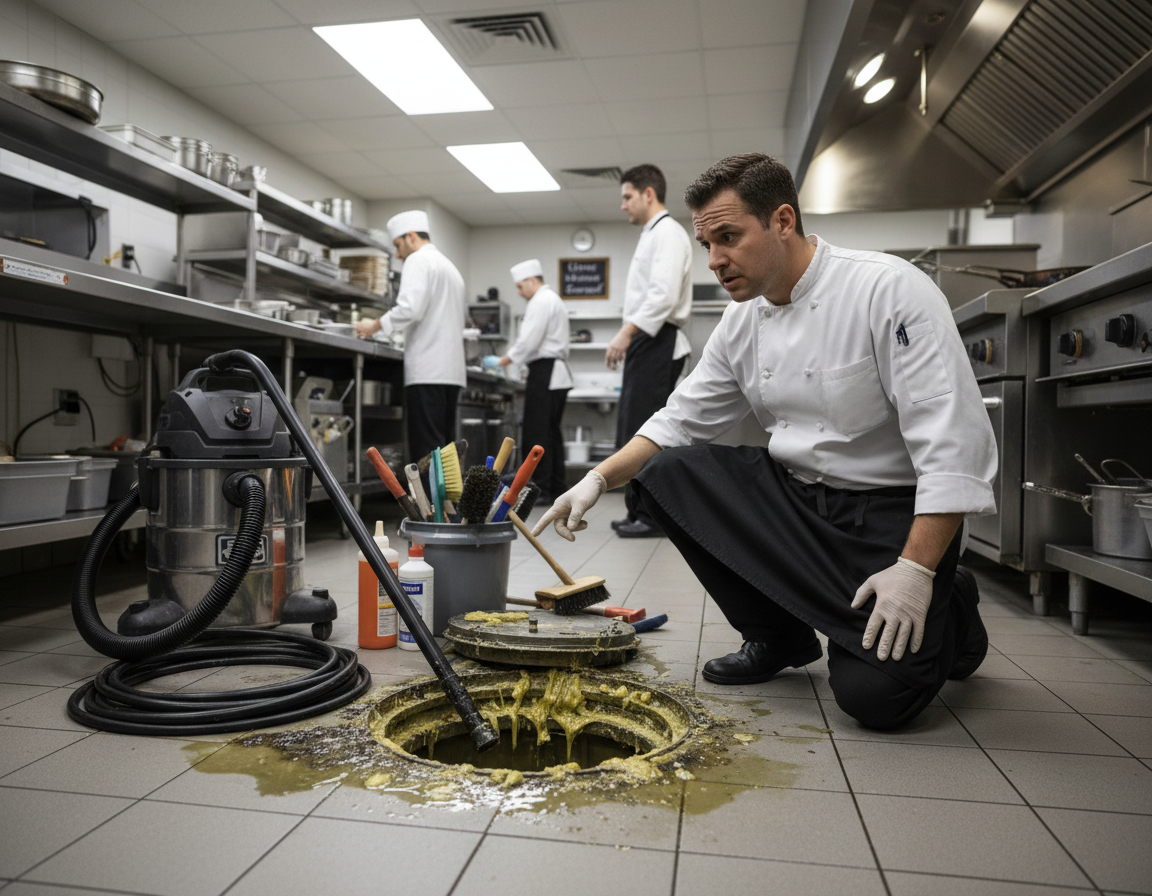
Welcome To Grease Cleaning Pros Of La Crescenta Montrose
Owning a restaurant in this community comes with challenges that are both rewarding and demanding. We proudly offer a warm welcome from our team to yours. We know the daily grind of managing a food service business.
We deeply understand the unique pressures you face. Managing kitchen fats, oils, and compliance is a constant task. That’s where our local expertise becomes your advantage.
Our philosophy is simple. We treat your kitchen’s plumbing and containment system with the utmost care. It’s not just a job for us; it’s about protecting your operation.
We consider ourselves partners in your success. Our goal is to help you avoid unexpected costs and costly downtime. This proactive approach saves you money and stress over time.
Our knowledge covers Montrose and La Crescenta municipal regulations. We’re familiar with common local sewer issues. This ensures your business stays on the right side of health codes.
Friendly customer service is our cornerstone. We always take the time to explain our trap cleaning process. No question is too small for our team.
You can trust us to handle all waste responsibly. Our waste disposal and recycling methods are thorough. We prioritize protecting the local environment for everyone.
We work around your schedule. Flexible appointment times mean minimal disruption to your service. Your operational needs always come first.
Our long-term aim is to build strong, lasting relationships. These are founded on trust, reliability, and excellent results. Let’s keep your kitchen running smoothly, together.
The Critical Importance Of Regular Grease Trap Cleaning
An ignored grease trap represents far more than a plumbing issue; it threatens your restaurant’s bottom line. Ignoring this important piece of equipment is not a small mistake. It’s a serious business risk with real financial and legal consequences.
How To Avoid Costly Fines And Health Department Shutdowns
Compliance involving the grease trap is taken very seriously by health inspectors. If they find an overfull or malfunctioning unit, they can issue immediate violations. In severe cases, they can force a temporary shutdown of your operation.
The fines for these violations are no joke. They can range from $1,000 to a staggering $50,000. This sum far exceeds the predictable, affordable cost of routine trap cleaning.
Compare that with spending only a few hundred dollars on scheduled service. An emergency repair or responding to a health department order can cost thousands. It’s a clear choice for protecting your money and operations.
Protect Your Reputation, Customer Safety, And Kitchen Equipment
A serious backup leads to foul odors and visible grease. This can drive customers away and damage your hard-earned reputation overnight. No one wants to dine where things seem unsanitary.
Safety hazards are a major concern. Slippery floors from an overflow can cause serious employee or customer injuries. This opens the door to costly lawsuits and further reputational harm.
Grease blockages rarely remain isolated. They strain your entire sewer and plumbing system. This leads to premature failure of pipes, pumps, and other expensive kitchen equipment.
Professional cleaning is not an optional expense. It’s an essential part of responsible kitchen management. Proper waste disposal also protects the local environment.
Working with Grease Cleaning Pros for scheduled service is one of the easiest ways to reduce all of these risks. We handle the job so you can focus on running your restaurants. This proactive step saves you stress and money over time.
When Should You Clean Your Grease Trap In La Crescenta Montrose?
One of the most frequent inquiries we receive concerns the optimal frequency for maintaining essential plumbing components. There is no universal schedule that fits every food service business. The right answer depends entirely on your specific kitchen’s output and daily practices.
A proper maintenance calendar is the cornerstone of compliance, efficiency, and trouble-free operations. Getting it wrong can lead to costly problems. Getting it right provides peace of mind.
What Determines Your Cleaning Schedule
Most municipalities enforce a common standard known as the 25% rule. This rule states that a grease trap must be serviced when fats, oils, and solids fill one-quarter of its capacity. At this point, the unit loses efficiency and becomes a compliance trigger.
Based on this rule, general guidelines emerge. A busy full-service restaurant often needs monthly pumping. A smaller cafe might manage with quarterly service.
High-volume establishments frequently require bi-weekly attention. Some fast-food restaurants need weekly maintenance due to their output.
Several key elements directly impact how quickly your traps fill up:
- Menu Items: A menu heavy in fried foods generates significantly more grease than one focused on salads or baked goods.
- Customer Volume: Higher traffic means more dishwashing, which sends more fats and food particles into the water system.
- Trap Size: The physical dimensions of your unit determine how much waste it can hold before service is required.
Complying With Local Regulations And Capacity Guidelines
Understanding and following local codes is essential. La Crescenta Montrose may have specific pumping frequency mandates. These regulations are designed to protect the public sewer system and community health.
We highly recommend maintaining detailed records for every pumping visit. This log helps you track fill rates over time. You can then adjust your schedule proactively based on real data.
Relying on guesswork is risky for your business. A professional assessment from our team can establish a data-driven maintenance plan. We evaluate your kitchen practices, volume, and equipment.
This assessment pinpoints your exact needs. It ensures you’re not servicing too often and wasting money. More importantly, it prevents you from servicing too infrequently and risking violations.
Proper disposal of the collected waste is part of our compliant service. An appropriate, professional schedule is your best defense against emergencies. It keeps your focus on your customers, not your plumbing.
Signs Your Grease Trap Needs Immediate Professional Attention
A properly functioning trap stays out of sight and out of mind, but when problems begin, the warning signs become obvious. Learning to recognize these distress signals is crucial for every food service operator. Ignoring them can turn a small issue into a major, costly crisis.
Your containment system provides obvious warnings before complete failure happens. These symptoms indicate that your plumbing needs professional service right away. Addressing them promptly protects your kitchen’s efficiency and compliance.
Slow Drainage And Foul Odors As Early Warning Signals
An early warning sign you will often notice is slow drainage. You might notice water pooling in your three-compartment sink or prep sinks. This sluggish flow often means fats and solids are clogging the pipes.
Gurgling sounds from drains are another red flag. These noises indicate air trapped in the lines due to blockages. It’s a telltale sign that your system is struggling.
Then there is the odor. A foul, rotten-egg odor is hard to miss. This is hydrogen sulfide gas produced by decomposing organic matter.
The odor is more than unpleasant because it can become toxic in enclosed areas. This odor is a clear signal that your trap is overdue for attention.
Visible Grease Backup And Noisy, Gurgling Drains
When you see oily sludge backing up into sinks or dishwashers, act fast. This visible grease means the unit is full and immediate service is critical. The waste has nowhere else to go.
Additional serious warning signs include grease appearing around floor drains. Multiple drains clogging at once points to a central problem. A sudden increase in flies or rodents can also signal an issue.
Standing water near the trap is a serious warning sign. Grease seepage outside the unit indicates a severe overflow. These are emergencies that threaten your operations.
Do not ignore these signs or try to fix the problem yourself. Home remedies often worsen the blockage. This leads to more expensive repairs and potential health code violations.
As soon as trouble appears, reach out to Grease Cleaning Pros. We offer prompt emergency service to resolve these issues quickly. Our team handles everything from pumping to proper waste disposal.
We restore your kitchen’s plumbing to safe, efficient operation. Don’t wait for a shutdown; contact us today for reliable, friendly help.
Our Complete Grease Trap Cleaning Process In La Crescenta Montrose
Our team follows a rigorous three-step protocol on every job to ensure complete results. We believe in a transparent, methodical approach that leaves nothing to chance. This ensures your kitchen plumbing operates at peak performance after every visit.
Our team is trained to execute each step with precision and care. The entire service is designed for maximum effectiveness with minimal disruption. You can trust us to handle the dirty work so you can focus on your customers.
Step 1: Initial Inspection And Compliance Documentation
Our friendly technician arrives at your scheduled time. They first locate and safely access your containment unit. An initial visual inspection is performed to gauge the overall condition.
The next step involves measuring the grease layer and the depth of settled solids. This critical data is recorded immediately. It serves as official documentation for your health and regulations compliance records.
The assessment creates a clear baseline for the cleaning that is needed. It also helps us track your unit’s fill rate over time for better scheduling. We start every trap cleaning with this essential information-gathering step.
Step 2: Thorough Pumping And Deep Cleaning
Using a powerful vacuum truck, we efficiently remove all contents from the grease trap. This includes floating fats, wastewater, and settled food solids. The powerful suction ensures a complete evacuation of the waste.
Pumping alone isn’t enough for a truly clean system. Our technicians then manually scrape the baffles and interior walls. This removes clinging residue that vacuum suction can miss.
Next, we use high-pressure washing to scour the interior surfaces. This step eliminates any remaining film or debris. We also inspect all inlet and outlet pipes for hidden blockages.
A structural integrity check is a crucial part of this phase. We look for any cracks, leaks, or damage that could cause future sewer issues. Identifying problems early prevents costly emergencies.
Step 3: Final Review And Proper Refill
Once the interior is spotless, we conduct a final quality inspection. We ensure every surface is clean and all connections are secure. Only then do we move to the last, vital step.
Clean water must be added back to the proper level. This is essential for the grease trap to function correctly the moment we leave. It creates the necessary seal and allows for immediate separation of new waste.
Throughout the job, safety is always our priority. We ventilate the work area to avoid exposure to gases. Our team also performs a thorough cleanup, leaving your space as tidy as we found it.
The entire trap cleaning process is typically completed within 30 to 90 minutes. This efficiency minimizes disruption to your restaurants workflow.
Our thorough multi-step process distinguishes us from other providers. It guarantees your system’s reliability and your peace of mind. You receive more than just a pump-out; you get a complete cleaning and inspection service that protects your business.
Grease Interceptor Maintenance For Larger Facilities
A large-scale containment system forms the backbone of a major kitchen’s plumbing. For hotels, hospitals, and big restaurants, a simple under-sink unit won’t suffice. These operations require a heavy-duty solution to manage their significant output.
That is where a grease interceptor becomes necessary. It’s a critical piece of infrastructure that protects the entire building’s sewer lines. Proper upkeep is not just recommended; it’s essential for the business.
Understanding The Difference Between Grease Traps And Grease Interceptors
It is essential to understand how these two devices differ. They serve the same basic purpose but on a completely different scale.
A standard grease trap is a compact, indoor unit. You’ll typically find it under a three-compartment sink. Its capacity is relatively small, often between 20 and 50 gallons.
A grease trap interceptor, on the other hand, is a large vault installed underground. These units are designed to hold hundreds or even thousands of gallons. They handle the waste from an entire building or multiple kitchens.
Here’s a quick breakdown of the key differences:
- Size & Location: Traps remain small and indoors, while interceptors are larger and buried outside.
- Capacity: Grease traps hold dozens of gallons. A grease interceptor can hold 500 to 5,000 gallons or more.
- Service Scope: Traps typically serve one sink or appliance, while Interceptors manage flow for an entire facility.
Facilities like food courts, large banquet halls, and institutional cafeterias rely on these big trap interceptor units. Their high-volume needs make a standard grease trap impractical.
How We Clean Interceptors Using Specialized Procedures
Cleaning and maintaining a large grease interceptor is a complex process. It requires heavy-duty equipment and specific expertise. Our team is fully equipped to handle this challenging service.
We begin by safely accessing the unit. We use specialized tools to remove the heavy concrete or metal lid. This provides direct access to the massive interior compartments.
Next, our team uses a powerful vacuum truck. This equipment pumps out thousands of gallons of waste and water. We ensure every compartment is completely evacuated.
After the pumping stage, our technicians move on to a deep clean. They manually scrub the interior surfaces and baffles. This removes any hardened residue the vacuum might miss.
Next, we carry out a full inspection. This is a crucial step for preventing future problems.
- We inspect the inlet and outlet tees for blockages.
- We search for any cracks, leaks, or structural issues.
- We check for groundwater infiltration that could overload the system.
Maintenance frequency for these units is often quarterly. Extremely high-output kitchens might need monthly service. We help you determine the right schedule based on your volume.
For major clogs in the connected lines, hydro jetting may be recommended. This technique uses a powerful hydro jet of water to blast through stubborn clogs. Hydro jetting restores full flow and protects your plumbing.
Neglecting a large trap interceptor can cause failure across the whole system. That’s why professional cleaning is non-negotiable. It saves you time, money, and ensures compliance with local regulations.
You can trust our provider to manage these complex jobs. We have the expertise and heavy equipment to do it efficiently and safely. Let us handle the big jobs so you can focus on running your facility.
Helpful Tips To Reduce Grease Buildup In Your Kitchen
Good management of fats, oils, and grease begins well before they enter the containment system. The best defense is a daily routine that minimizes what goes down your drains. Combining smart habits with professional support forms a complete strategy for any food service business.
This strategy saves time, helps protect your kitchen equipment, and supports compliance. It also makes our scheduled service visits more effective and efficient. Let’s explore how your team can make a big difference.
Best Practices In Staff Training And Kitchen Operations
Building a proactive workplace culture is essential. Every team member should understand their role in prevention. Comprehensive training explains why this matters for their work environment and the business’s success.
Begin with straightforward, consistent rules for your kitchen operations. Scrape plates and pans thoroughly into the trash before they touch dishwater. This keeps large food particles out of the plumbing.
Install and maintain sink strainer baskets. Empty them frequently throughout the shift. A quick wipe of greasy pans with a paper towel can capture a surprising amount of oil.
The single most important rule cannot be ignored. Never pour any fats, oils, or grease down a drain. Even small amounts quickly accumulate in pipes and cause major blockages. Hot water only melts it temporarily; it solidifies further down your system.
Proper Disposal And Recycling Of Used Cooking Oils
When dealing with fryer oil and other waste, proper handling is critical. Always collect used cooking oil in dedicated, leak-proof containers. Label them clearly and store them in a safe, designated area.
Working with a professional collection service makes this process much easier. A reliable provider schedules regular pickups, handling the messy oil disposal for you. This ensures safe and compliant disposal every time.
Recycling this material offers fantastic benefits. Used cooking oil is transformed into biodiesel, a renewable fuel. Many businesses earn rebates for their recycled cooking oil, turning waste into money.
The environmental impact is significant. Recycling just one gallon of used cooking oil can prevent the contamination of up to one million gallons of fresh water. It’s a simple choice with a powerful effect on our local environment.
To add another layer of protection, consider secondary grease-catching devices under fryer stations. Maintain these devices according to the manufacturer’s instructions. They provide an extra layer of defense for your plumbing.
These daily practices, combined with regular professional maintenance from Grease Cleaning Pros, create a powerful defense. You protect your operations, support community health, and contribute to a cleaner environment. It’s a winning strategy for everyone.
Why Choose Grease Cleaning Pros For Reliable, Friendly Service
The efficiency and compliance of your kitchen depend on a maintenance provider you can rely on.
Our team brings deep local knowledge and a friendly approach to every job. We work around your schedule with early or late appointments to avoid disrupting your operations.
Our efficient service relies on modern, quiet equipment. Our process includes pumping, scrubbing, and inspecting your entire plumbing system. We provide detailed records for health inspections.
Our service should be seen as an investment in your business’s safety and reputation. Let’s keep your restaurants running smoothly.
Review the date of your last maintenance service. If it’s been a while, contact us for a friendly consultation. We’re here to serve our community.
Related: Grease Cleaning Pros in Santa Clarita: Seasonal Maintenance Tips